

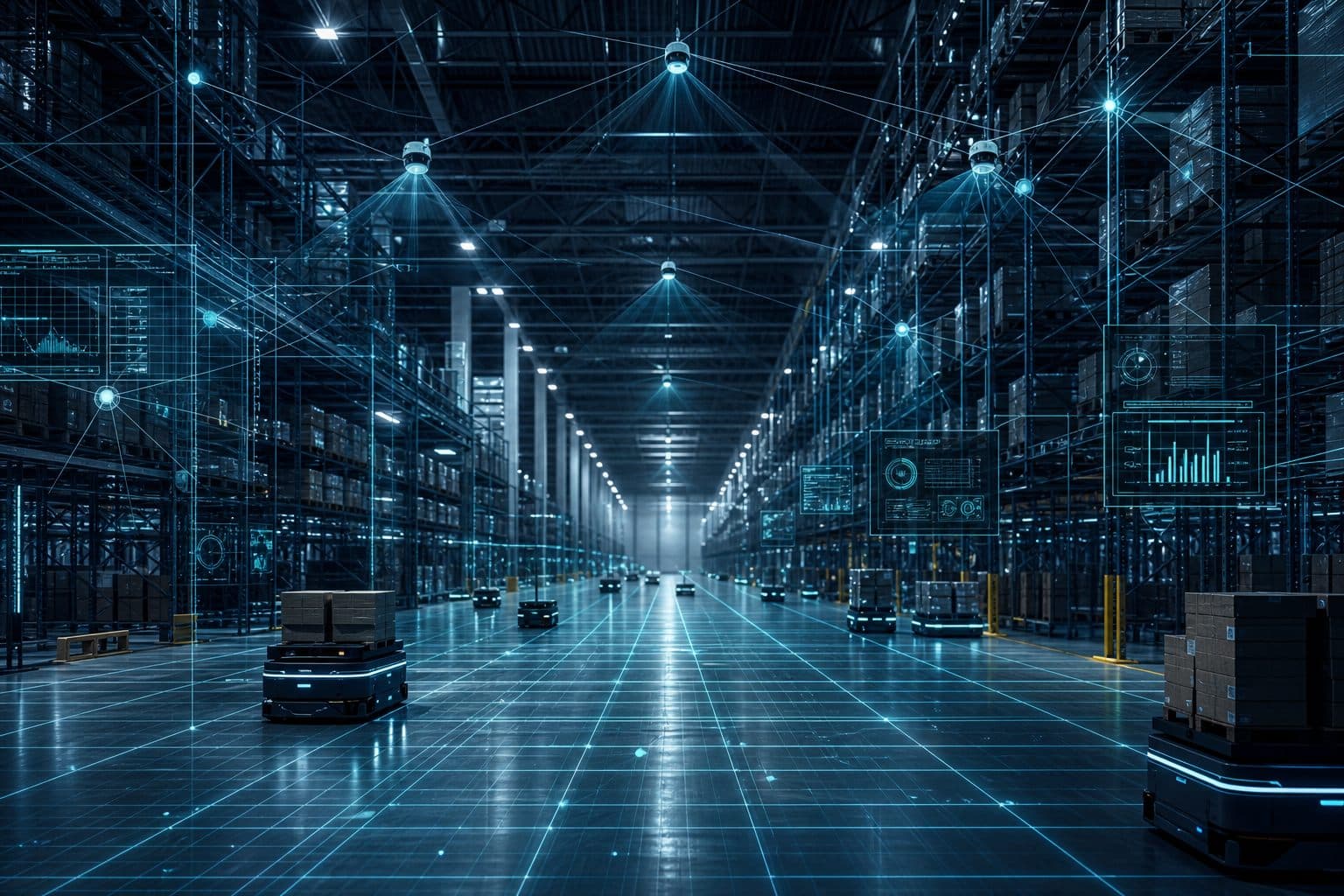
Industry 4.0
Industry 4.0 AI Solutions
Most plants do not have a data problem. They have eleven systems that each hold a piece of the answer. NGSPURS puts vision, controller telemetry and sensor streams behind one model layer, deployed at the edge where latency matters and in the cloud where scale does.
- Vision plus PLC plus IoT
- Edge-first architecture
- Air-gapped deployment
- Open MLOps pipeline
Typical outcome
Live0%
less time spent reconciling data across systems
- unified per site on average
- 0 sourcesunified per site on average
- edge uptime with no cloud dependency
- 0.9%edge uptime with no cloud dependency
- sites managed from one control plane
- 0+sites managed from one control plane
What your current process cannot see
Digitisation without integration just moves the silos onto screens. The gaps between systems are where the answers hide.
Every system tells a different truth
The MES says the line ran. The camera says it was blocked for nine minutes. Nobody can reconcile the two, so both get quietly ignored.
Cloud round-trips are too slow to act on
A detection that has to reach a data centre and come back cannot stop a press or divert a vehicle. By the time the answer lands, the moment has passed.
Pilots never become platforms
A model trained on one line by one vendor cannot be redeployed to the next plant without starting over, so the proof of concept stays a proof of concept.
Anomalies are found in hindsight
Drift in a motor, a bearing or a batch shows up in the monthly report long after the scrap has been produced and shipped.
One fabric, deployed where the decision actually happens.
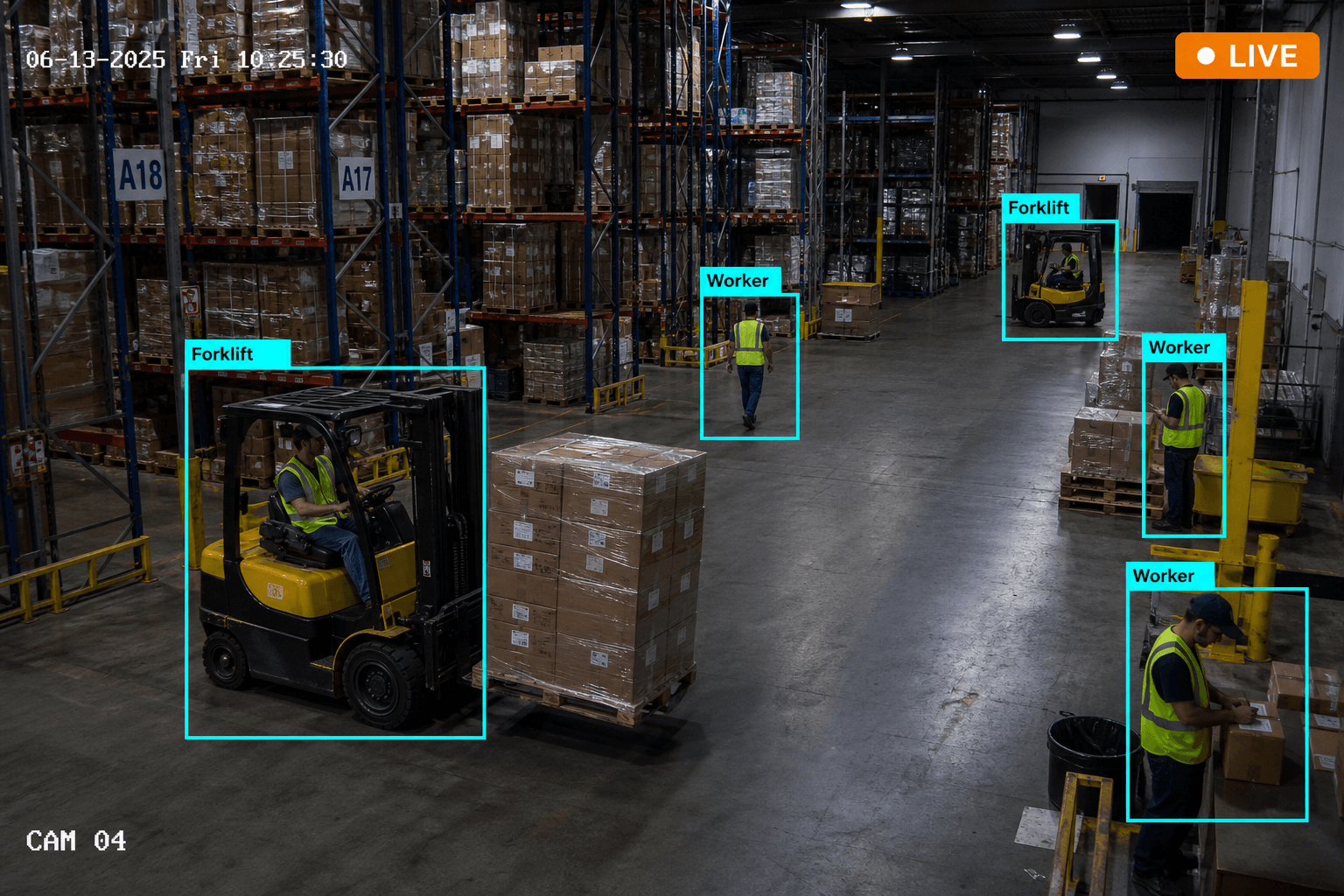
Same cameras. Different outcome.
The infrastructure does not change. What changes is whether anything is watching it, and whether what it sees reaches the person who can act.
- Vision, PLC and sensor data in separate tools
- Every detection dependent on a cloud round-trip
- Models rebuilt from scratch for each new site
- Alerts arriving in four different inboxes
- Drift discovered in the month-end review
- One model layer reading every source together
- Latency-critical inference running on the edge box
- Deploy a validated model to the next plant in days
- A single alert bus with severity and ownership
- Anomaly flagged while the batch is still running
Built for industry 4.0 conditions
An open stack built on the frameworks your team already knows, so nothing about this deployment locks you in.
Edge model deployment
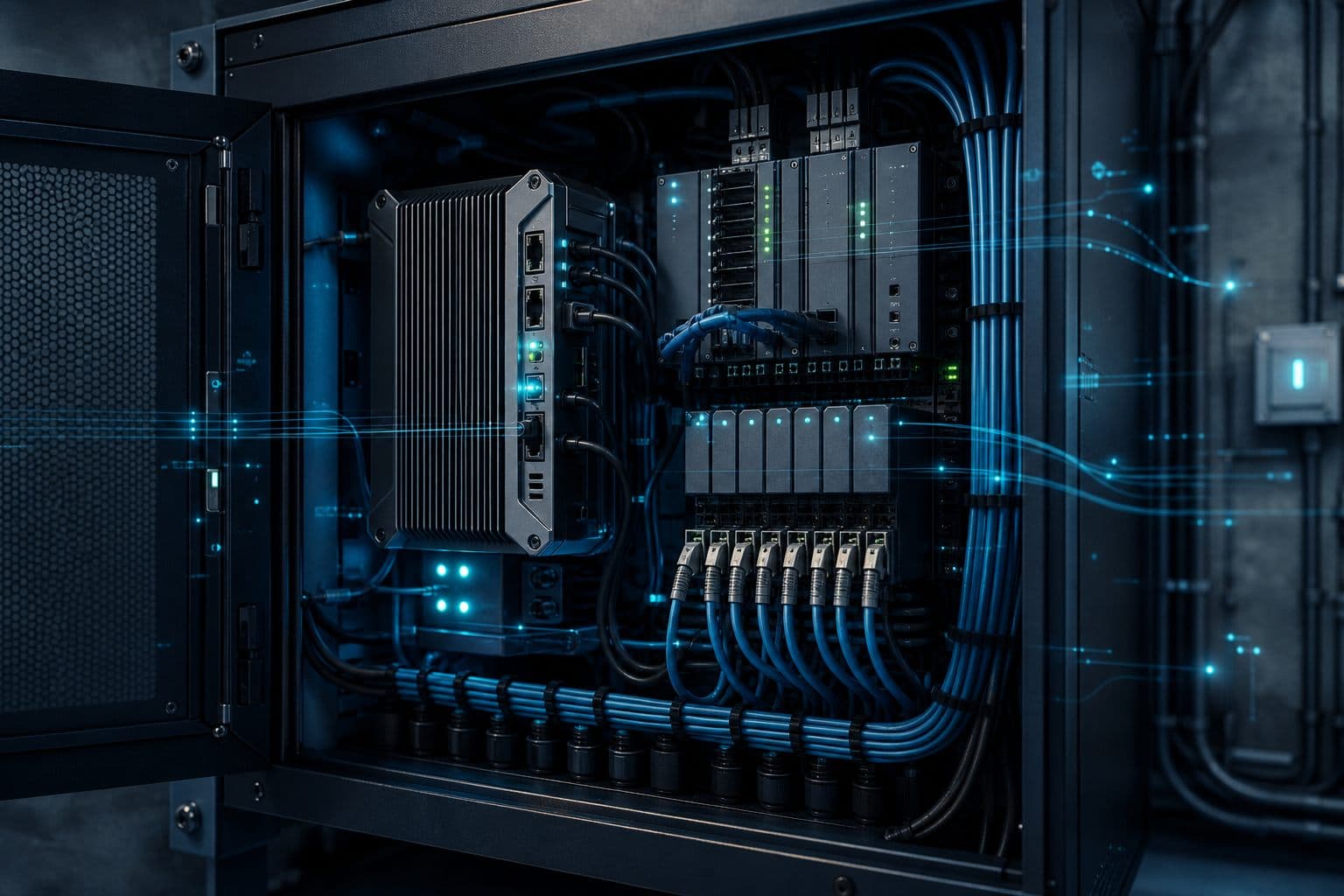
Push validated models to ruggedised edge hardware on the floor. Inference continues through a network outage and syncs when the link returns.
Vision and PLC fusion
Correlate what the camera saw with what the controller reported, so a stoppage carries both the signal and the picture.
Anomaly and drift detection
Baseline normal for each line, then flag the slow deviations in cycle time, vibration and output quality before they reach scrap.
Unified alert and event bus
One severity model across every source, routed to SMS, WhatsApp, email or your existing ticketing system with clear ownership.
Operations dashboards
Live plant, line and station views with drill-down to the underlying clip or signal, plus scheduled exports to Power BI and Tableau.
MLOps and custom models
Label, train, version and roll back your own models on PyTorch or TensorFlow through a pipeline your data team can actually audit.
Detect. Understand. Act.
An alert on its own is noise. The value is in what happens between the event and the fix — and that is the part most systems leave to you.
01 — Detect
The extruder is drifting, quietly
Cycle time on Extruder 3 has crept up 4% over nine days — well inside tolerance, invisible on any single shift report. The edge node running on the line notices the trend, not the reading, and raises it while the batch is still in progress.
Event stream
LiveModel deployed, v14 live
Edge node — Plant 2
02 — Understand
The camera and the controller agree
Vision shows material building at the die. The PLC shows torque rising to match. Two systems that have never spoken to each other now describe the same failure, nine days before it would have become a scrap batch.

03 — Act
One work order, then the same model on four more plants
Maintenance gets a work order with both traces attached and clears the die on the next changeover. The detection is then packaged and pushed to the four other plants running the same extruder line — in days, not another six-month pilot.
One deployment, three different jobs
The same data, presented for the decision each role actually has to make. Nobody should have to read a safety dashboard to find a maintenance answer.
What we deploy in industry 4.0

The questions we actually get asked
What industry 4.0 teams want to know before they commit to a pilot.
Together, let’s shape
The future of operational AI
Products that see the floor, move the field, and brief the board.
Book a working session